Connect once, read-only. TSO maps every SharePoint site, OneDrive, mailbox, and Teams channel in your tenant — exposing exactly what's inflating your bill and feeding stale data to your Copilot agents. No changes. Just clarity.
Most M365 tenants are sitting on years of digital clutter. It costs you money today — and it'll cost you credibility when Copilot starts using it tomorrow.
Your Microsoft 365 storage quota is quietly being consumed by years of abandoned SharePoint sites, forgotten OneDrive folders, oversized mailboxes, and Teams channels from projects that ended in 2021. Every unused gigabyte has a price tag.
When Copilot searches your tenant to answer questions, draft documents, or summarise data, it reads everything — including 5-year-old HR policies, superseded procedures, archived project files, and email threads from people who left three years ago.
TSO authenticates via Microsoft Graph with read-only delegated permissions. It never writes to your tenant, never deletes a single file, and never stores your data beyond your session. You get the full picture — we keep nothing. Your IT team can verify every permission requested before connecting.
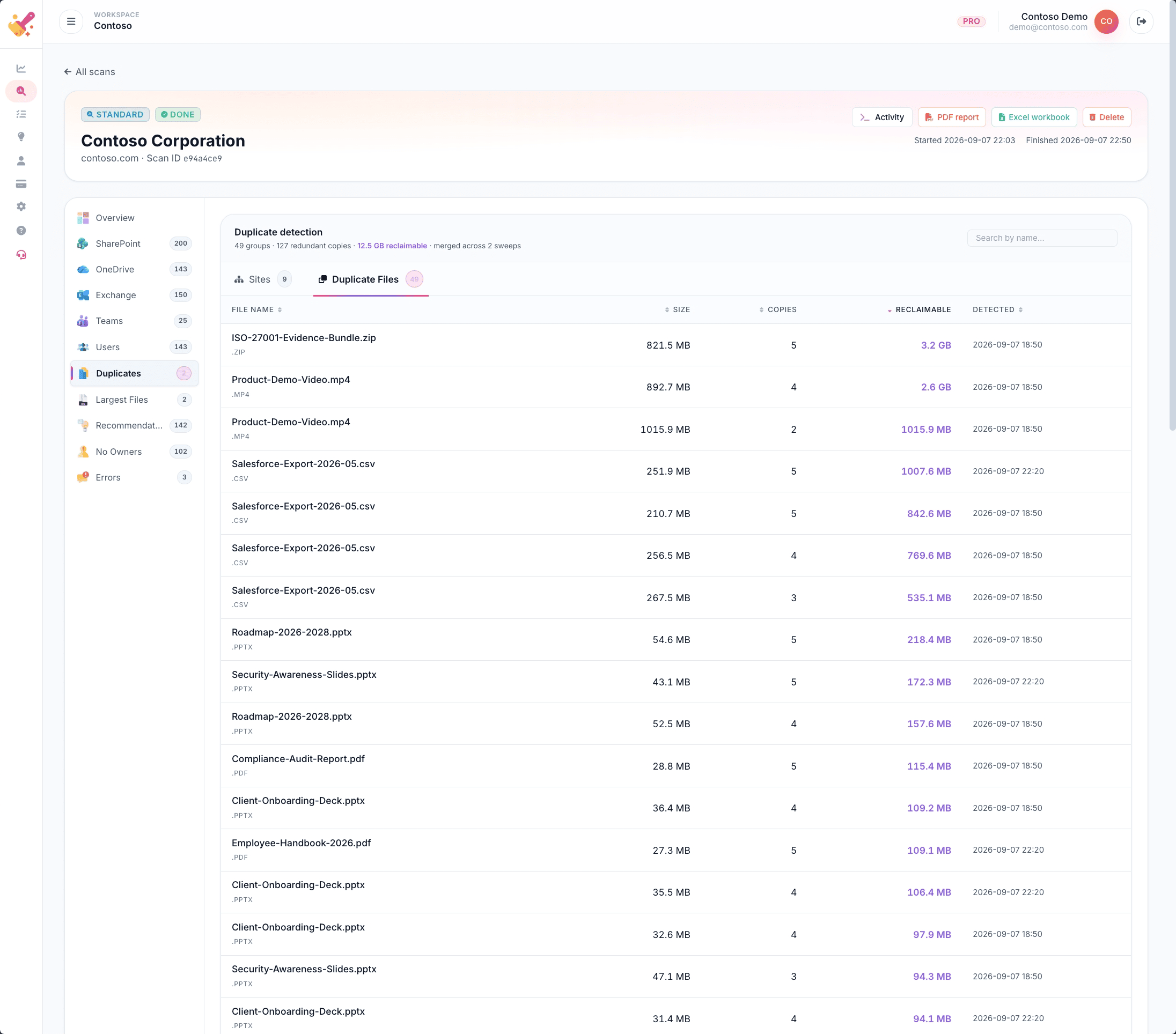
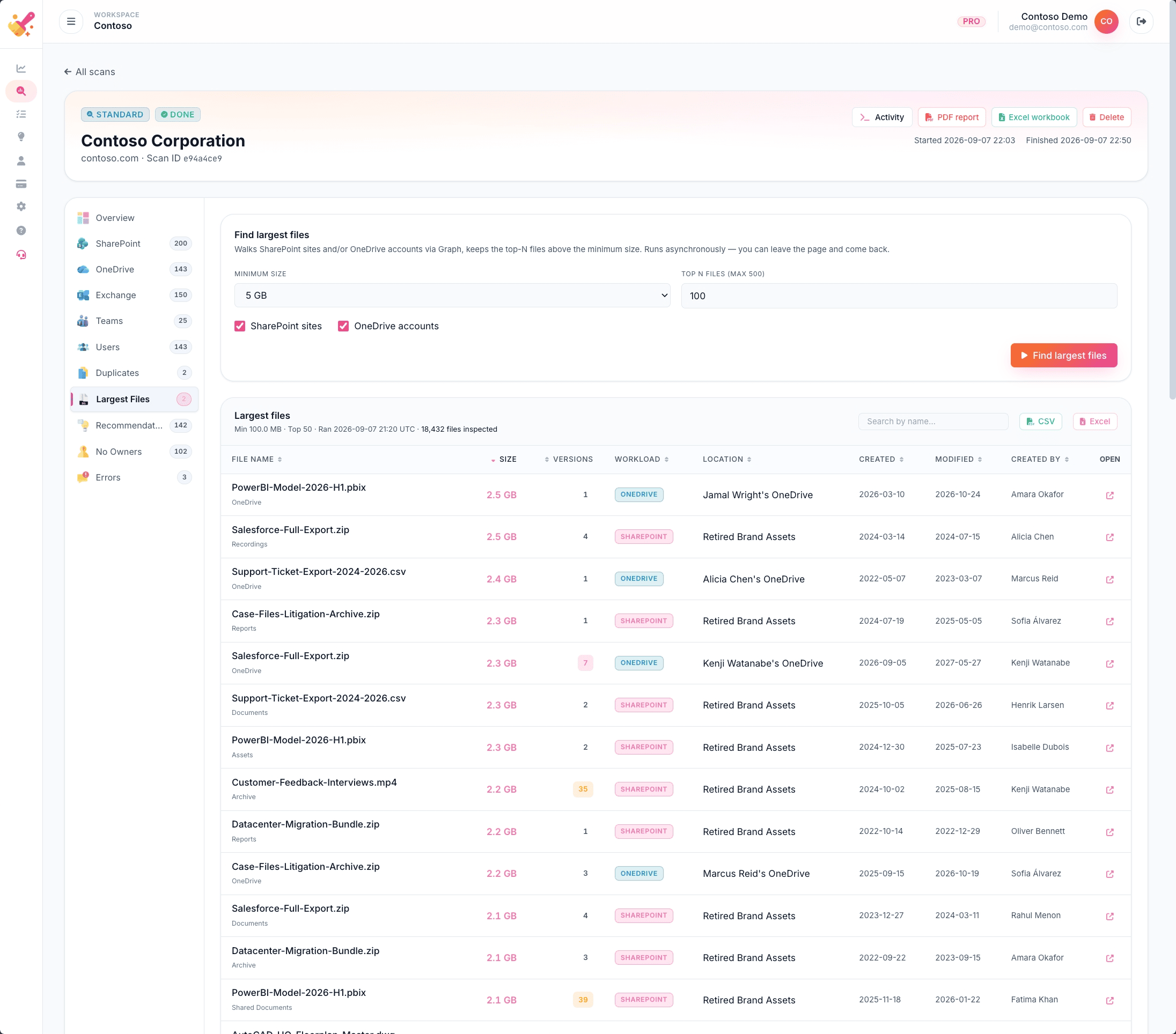
TSO analyses four workloads and two intelligence layers to give you a complete, costed picture of your M365 storage health.
Every site analysed for storage size, last-modified date, library count, and ownership status — surface the sites that haven't been touched in years.
Per-user OneDrive storage with last activity, quota usage, and over-quota users. Spot leavers and inactive accounts still consuming storage.
Primary and archive mailbox sizes for every user, distribution group, and shared mailbox. Identify bloated inboxes and missing archive policies.
Files stored in Teams channels — often invisible in SharePoint views. Surface large, stale, or ownerless Teams file stores.
Every finding is turned into an actionable recommendation — scored by impact, estimated GB savings, and suggested action (archive, review, delete).
Input your Microsoft 365 storage rate and licensed user count. TSO calculates your real annual overage and projects your savings across three cleanup scenarios.
Every scan is stored in your history. Run a deep scan today, make changes, run another next month, and see exactly how much storage you reclaimed and how your recommendations count dropped.
Each result shows total storage, items scanned, and scan duration at a glance. Export any scan as a PDF report or Excel workbook directly from the list.
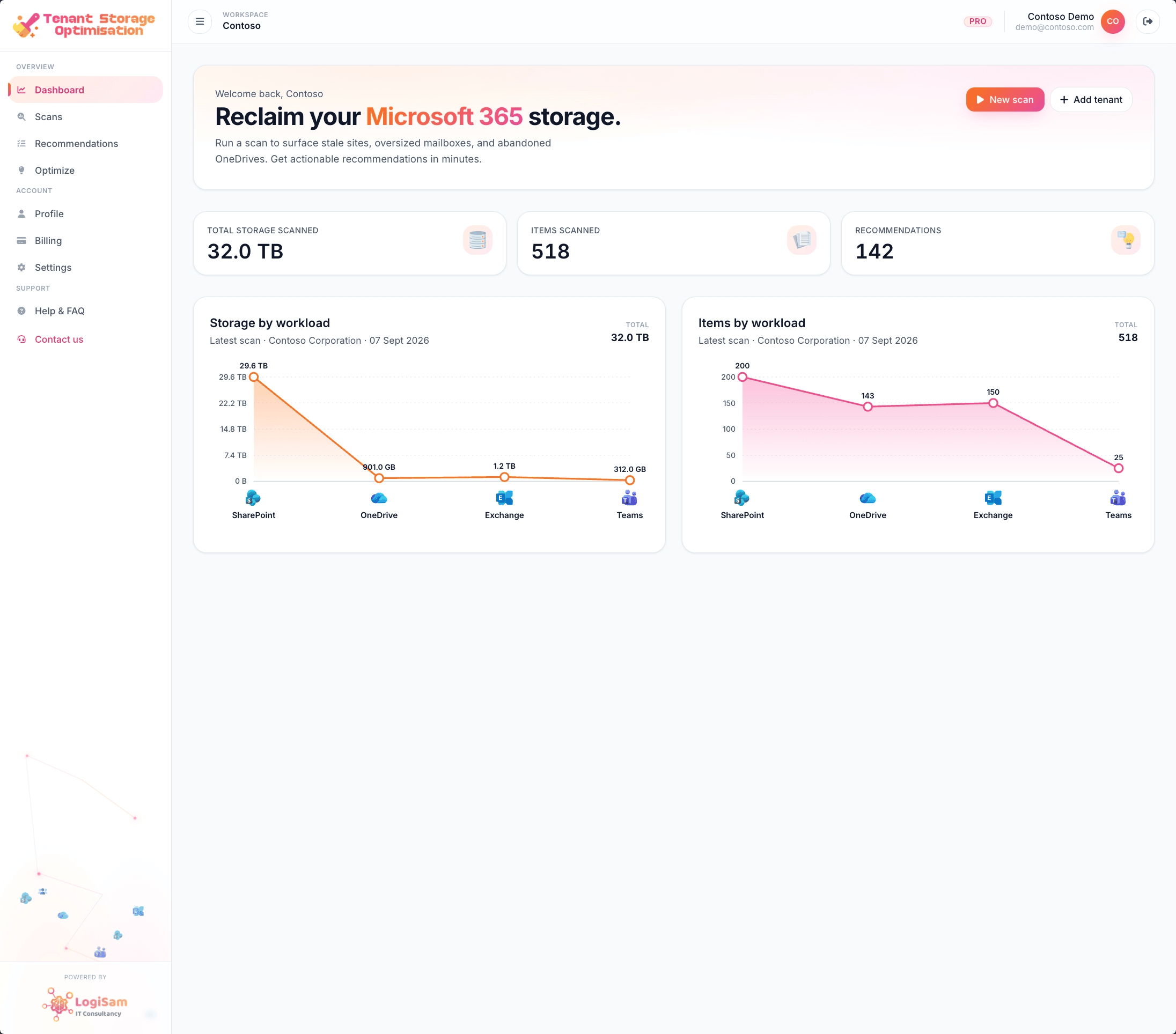
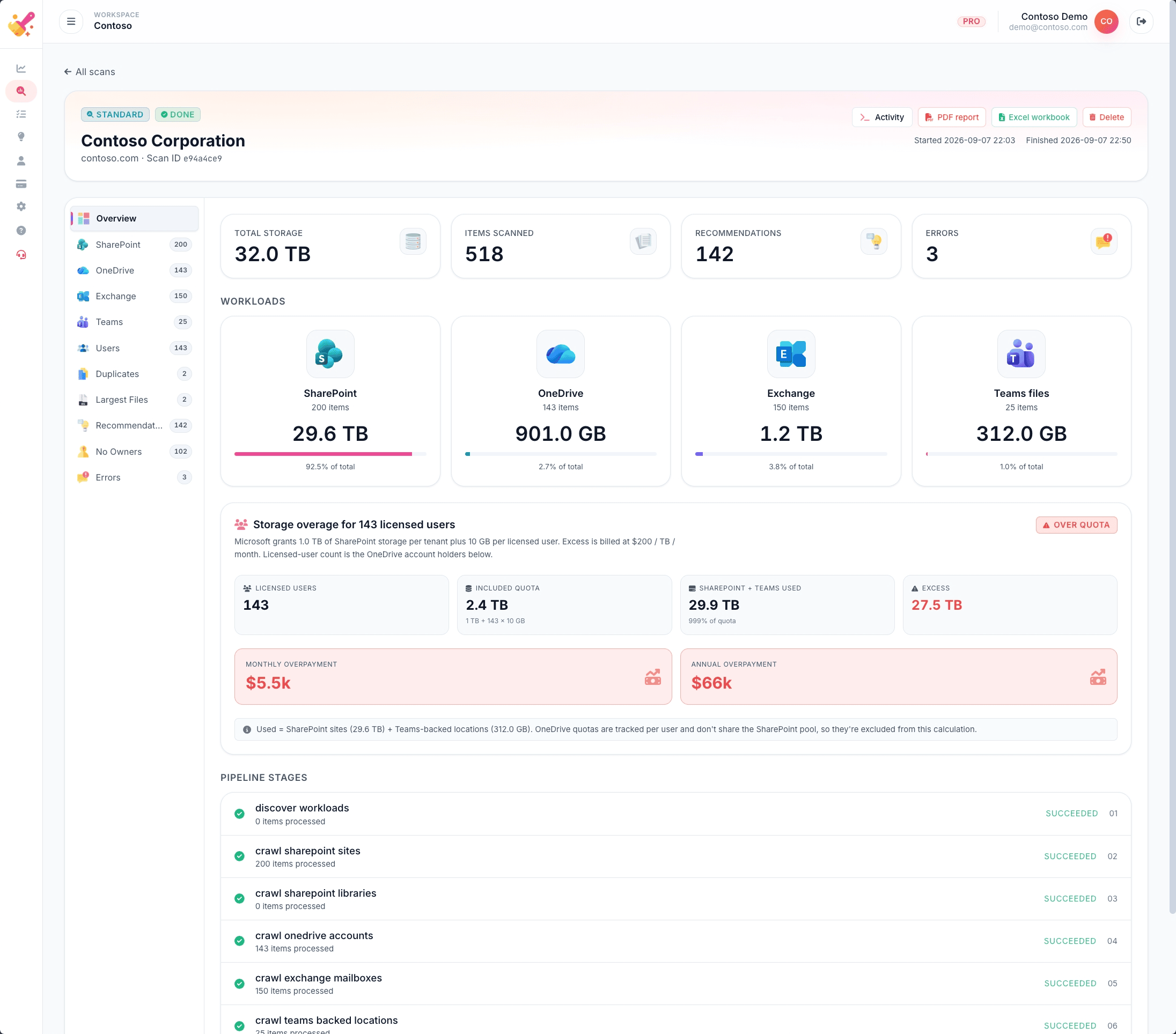
The scan overview gives you an immediate breakdown of your total storage across all four workloads — SharePoint, OneDrive, Exchange, and Teams — with total items scanned and recommendation count.
In this real scan: 32 TB total storage, 482,636 items scanned, and 142 actionable recommendations generated automatically.
Every SharePoint site is listed with its exact storage size, library count, creation date, and last modified date. Sites like "Retired Brand Assets" — 2.3 TB, last touched in 2020 — stand out immediately.
These are the sites your IT team didn't know were still there. And the ones Copilot is happily reading every time someone asks a question.
TSO lists every mailbox — user, shared, and distribution — with primary size, archive size, archive status, and last activity date. Distribution groups like "Engineering All" at 31.7 GB primary are often invisible until you look.
Find mailboxes growing without an archive policy, users sitting on outdated email threads, and shared mailboxes no one owns any more.
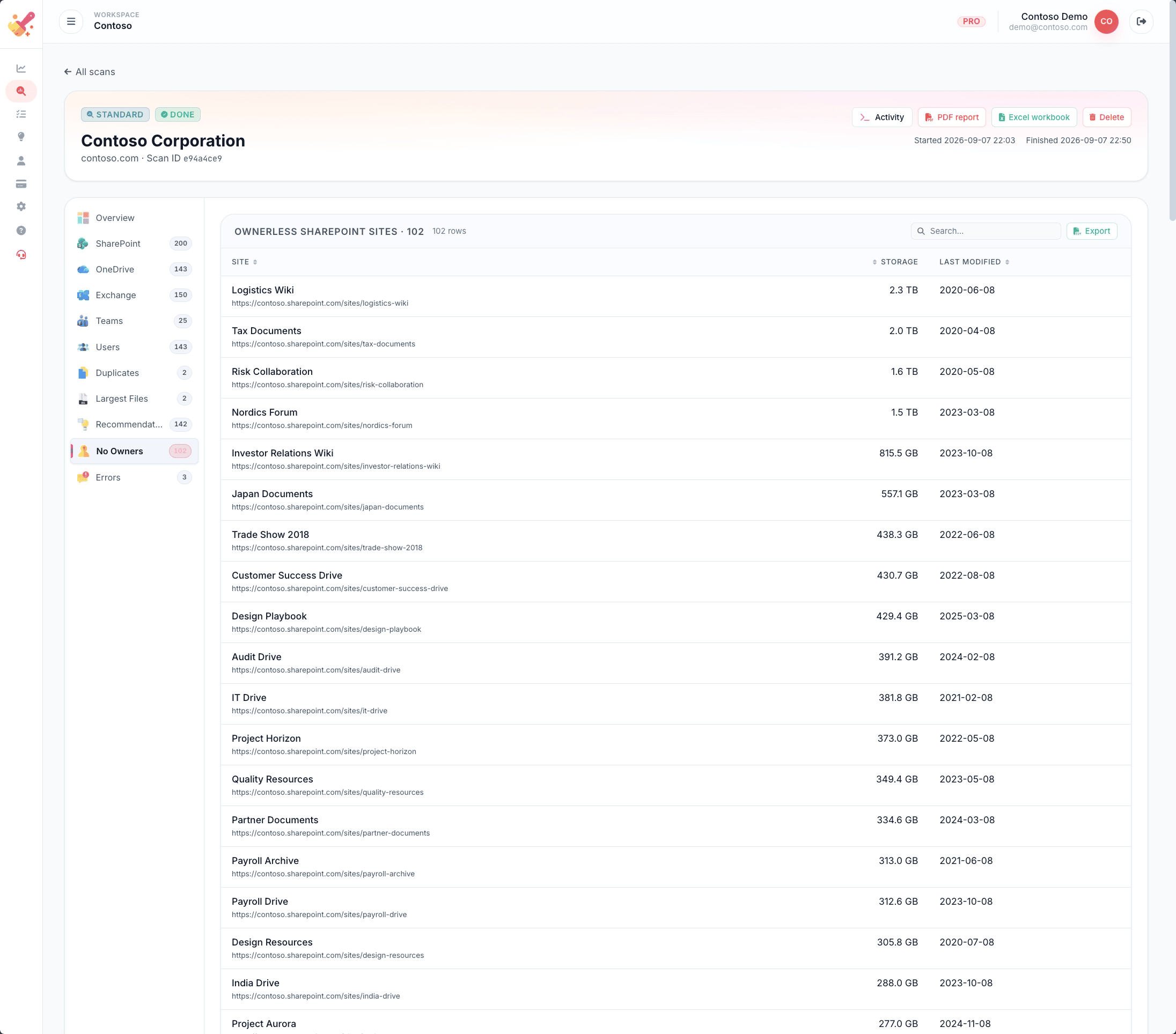
Sites with no owner have no one responsible for their content, access, or lifecycle. TSO flags every ownerless SharePoint site — including their storage size and last-modified date — so you can assign owners or trigger an archive review.
In this tenant: 102 ownerless sites identified, including "Logistics Wiki" (2.3 TB) and "Tax Documents" (2.0 TB) — last modified in 2020 and 2019 respectively.
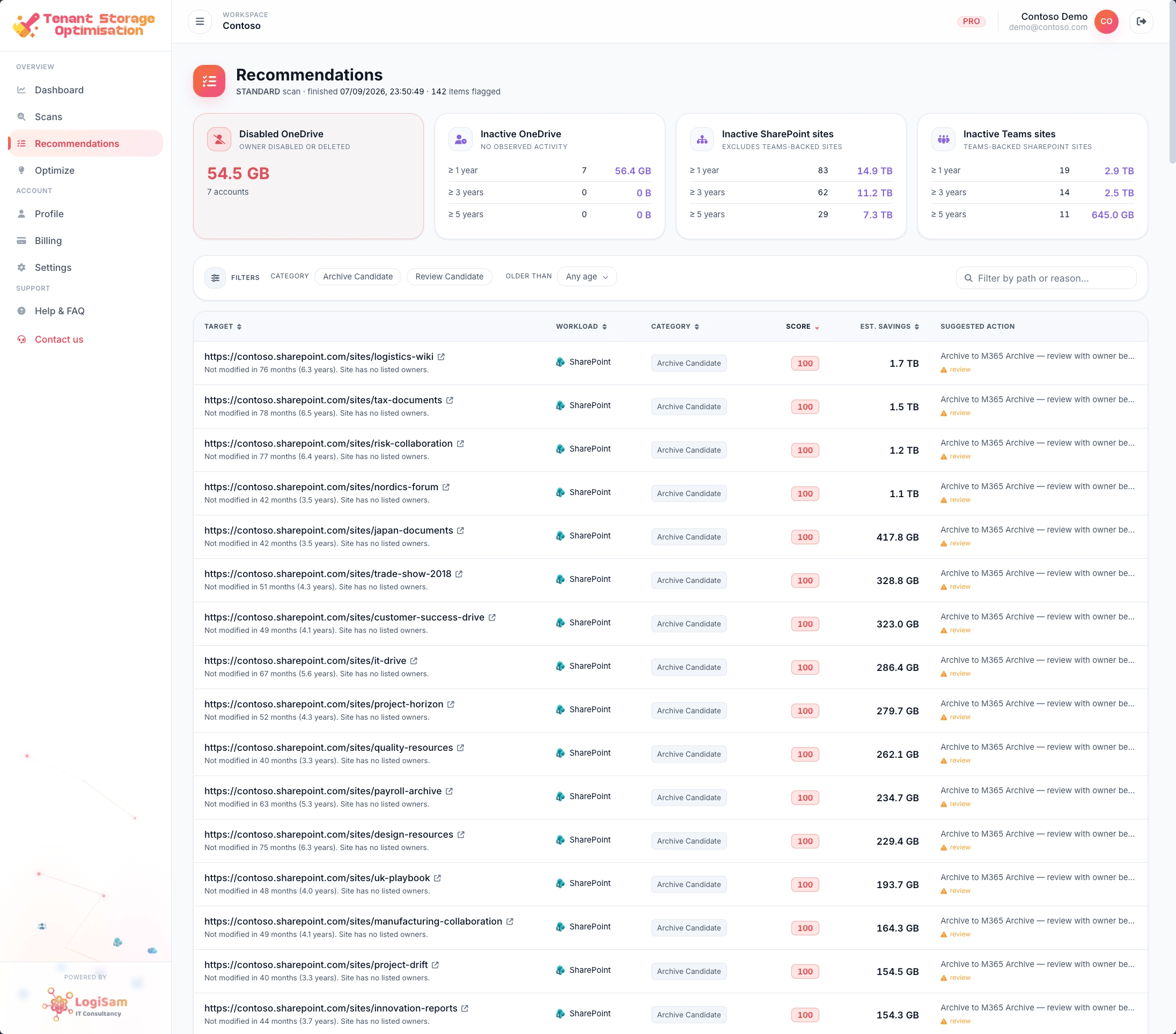
Every finding is turned into a recommendation with a priority score, the target location, category (Archive Candidate, Review Candidate), estimated GB savings, and a suggested action.
Items like the logistics-wiki site — "Not modified in 79 months (6.5 years), site has no listed owners" — score maximum priority. Filter, sort, or export the full list as a workable action plan.
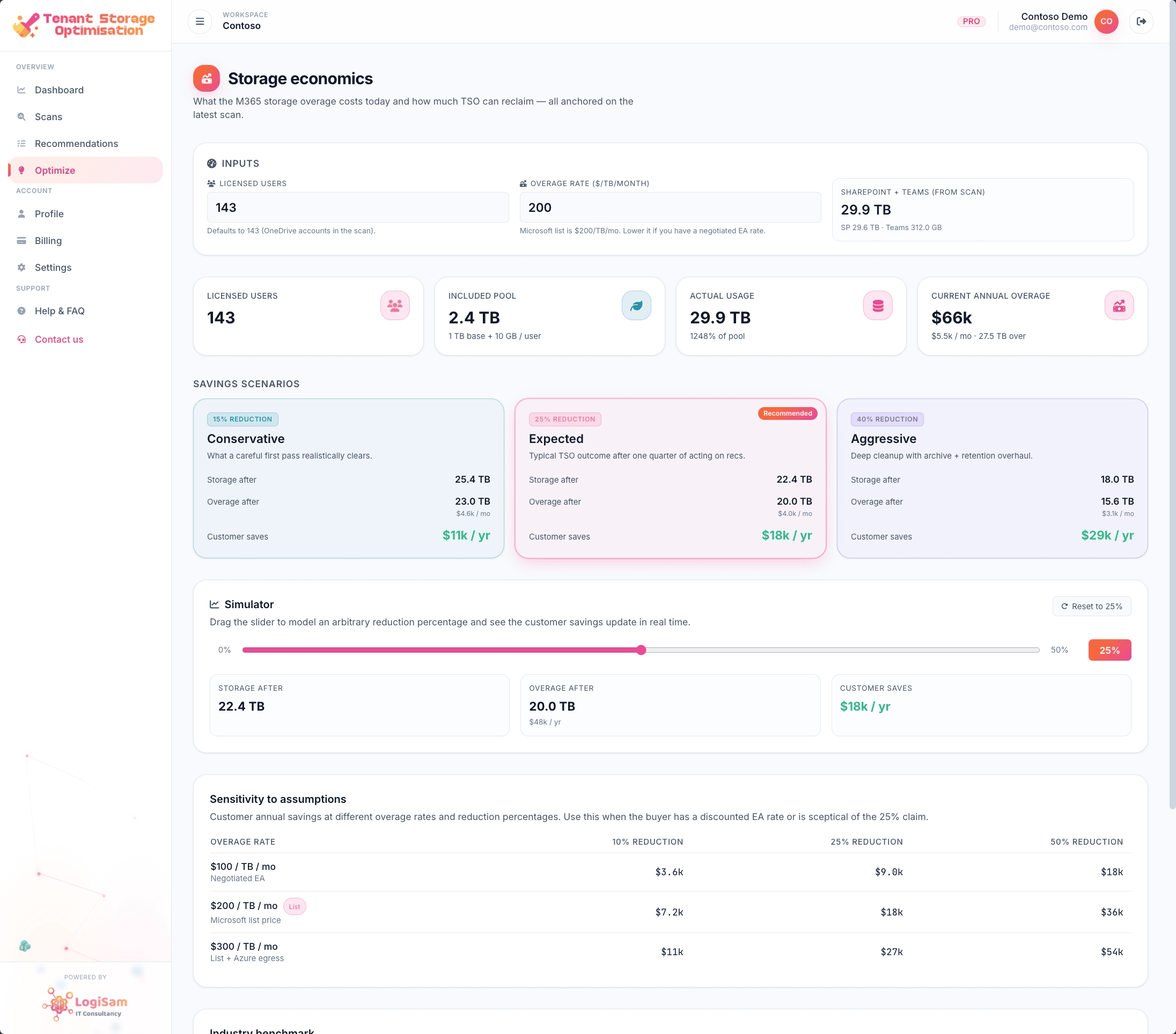
The Storage Economics module connects the dots between your findings and your Microsoft 365 bill. Input your licensed user count and average storage rate — TSO calculates your current annual overage and projects three cleanup scenarios.
In this real tenant: $66k/yr current overage. Conservative cleanup saves $11k/yr. Expected TSO outcome: $18k/yr saved. Aggressive cleanup: $25k/yr saved.
TSO surfaces issues across all four workloads — from stale content and ownerless sites to cost overruns and Copilot quality risks.
No agents to install, no professional services engagement. You connect, we scan, you act.
Grant read-only Microsoft 365 access in under 30 seconds via standard OAuth consent. No admin agent to install, no firewall rules — just a standard Microsoft permissions flow.
TSO performs a deep scan of every SharePoint site, OneDrive account, Exchange mailbox, and Teams channel in your tenant — returning results in minutes with full workload breakdowns.
Download your prioritised action plan — with estimated savings per item, archive recommendations, and your total annual overage — as a PDF report or working Excel workbook.
Know exactly what your M365 storage is costing you, what's making Copilot unreliable, and what to do about it — in minutes.
Read-only · No data stored · Nothing modified in your tenant